Water On The Moon: Unveiling The Presence Of A Valuable Resource

Water is essential for life. In our solar system, there are several places where the presence of liquid water beyond Earth has been detected or strongly suggested. Our Moon is one of them.

Recently, China has discovered strange glass beads on moon that may contain billions of tons of water. Scientists detected water trapped inside glass spherules on the moon after analyzing soil samples brought back by China's Chang'e-5 mission.
Water On The Moon: Unveiling The Presence Of A Valuable Resource
Credit: google


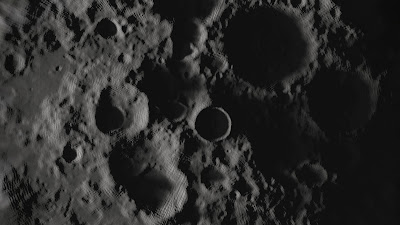
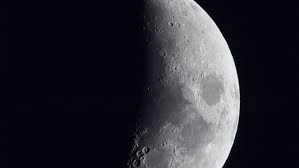
The discovery of water on the Moon has revolutionized our understanding of Earth's celestial neighbor. Previously thought to be a dry and barren world, scientific investigations have revealed the presence of water in various forms on the Moon.

Historical Perspectives

Early lunar missions, such as the Apollo program in the 1960s and 1970s, provided initial hints of the possibility of lunar water. However, it was not until more recent missions and advancements in scientific techniques that the presence of water on the Moon was firmly established and recent discoveries have indicated the existence of water in various forms.

  1. Lunar Ice (2009): NASA's Lunar Reconnaissance Orbiter (LRO) and the Lunar Crater Observation and Sensing Satellite (LCROSS) mission provided evidence for the existence of water ice on the Moon. LCROSS impacted a crater near the lunar south pole, and the analysis of the resulting plume indicated the presence of water ice in the lunar soil. Subsequent observations and measurements from multiple missions have further confirmed the presence of water ice in permanently shadowed regions of the Moon, particularly within craters at the poles.
  2. Surface Water Molecules (2020): Scientists using data from NASA's SOFIA (Stratospheric Observatory for Infrared Astronomy) observatory announced the detection of water molecules (H2O) on the Moon's sunlit surface. These water molecules were found to be present in Clavius Crater, a large crater located in the southern hemisphere. The discovery suggests that water may be more widespread on the Moon's surface than previously thought.
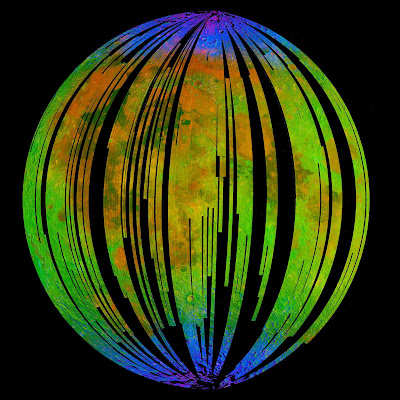
However, water on the Moon is not in liquid form on its surface. Instead, it exists as ice within shadowed craters or as water molecules adsorbed onto the lunar regolith (the layer of loose, fragmented material covering the solid bedrock). The extremely cold temperatures and lack of significant atmosphere prevent liquid water from existing on the Moon's surface.

Water On The Moon: Unveiling The Presence Of A Valuable Resource
Credit: NASA/JPL/ISRO


Distribution & Occurrence

The distribution of lunar water is not uniform but concentrated in specific areas. Permanently shadowed regions within craters at the lunar poles, where sunlight cannot reach, serve as cold traps for accumulating water ice. These regions, known as cold traps, offer stable environments for water molecules to persist. They are estimated to contain significant quantities of water ice.

Potential Source

The presence of water on the Moon is believed to be originated from multiple sources. Comets and impacting asteroids have delivered water in the form of ice to the lunar surface over billions of years. Additionally, the solar wind, a stream of charged particles from the Sun, may have contributed hydrogen, which later combined with oxygen to form water.

Significance Of Lunar Water

The discovery of water on the Moon has profound implications for scientific research and future space exploration. Water is a crucial resource for sustaining life and enabling human exploration. Lunar water can potentially be utilized for life support systems, fuel production, and as a resource for further space missions. It can also provide insights into the Moon's geological history and the evolution of the early solar system.

Water On The Moon: Unveiling The Presence Of A Valuable Resource
Credit: NASA


The discovery of water on the Moon has transformed our perception of Earth's natural satellite and its potential as a stepping stone for human exploration. Further research and exploration are necessary to fully understand the extent and accessibility of lunar water and to unlock its potential as a valuable resource for future space endeavors.


Post a Comment

Previous Post Next Post

نموذج الاتصال