
"Space Pen" is a popular term used to refer to
the Fisher Space Pen, a specially designed writing instrument that can be used
in microgravity environments such as space.
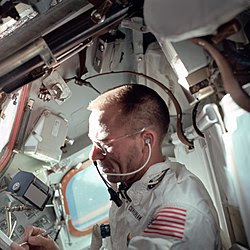
Initially, astronauts and cosmonauts both used pencils in space. NASA did spend some money researching the viability of a ballpoint pen designed for use in space, but scrapped the project early when it became clear that costs would spiral.
 |
| Credit: google Images |
To address the challenges regarding pencils and ball points,
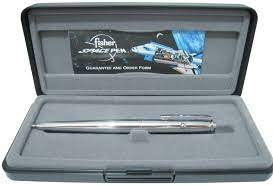
the Fisher Space Pen was developed by Paul Fisher in the 1960s. The Fisher
Space Pen uses a pressurized ink cartridge that allows the pen to write in zero
gravity, upside down, and in extreme temperatures ranging from -30°C (-20°F) to
121°C (250°F). The pen uses a thixotropic ink, which is gel-like and remains
solid until the shearing action of writing liquefies it. This enables the ink
to flow smoothly onto the page.
The Fisher Space Pen was first used by NASA astronauts on the Apollo 7 mission in 1968 and has been used on subsequent space missions ever since. It has become a symbol of innovation and reliability in space exploration, although it's worth noting that Russian cosmonauts have also used similar pressurized pens called "Agat" since the 1960s.
 |
| Credit: google Images |
Why astronauts do not use pencils in space?
Astronauts do not use pencils in space for several reasons:
- Fragile
and flammable: Traditional wooden pencils have a graphite tip that can
break easily and create small graphite particles that can float in
microgravity. These particles pose a risk of getting into equipment or
astronauts' eyes, potentially causing damage or irritation. Moreover, the
wood in pencils is flammable, which can be hazardous in a closed
spacecraft environment.
- Sharpening
and waste: Pencils require regular sharpening to maintain a usable writing
tip. In space, the sharpened wood shavings and graphite dust pose a
problem as they can float around the cabin and interfere with delicate
equipment or be inhaled by astronauts. Accumulation of such debris can
compromise the safety and functionality of the spacecraft.
- Electrical
conductivity: Graphite is conductive, and in a confined space environment
like a spacecraft, accidental contact between the pencil tip and
electrical components could result in short circuits or damage to
sensitive electronics. This poses a risk to both the crew and the
mission's success.
- Penetration
of seals: Pencils have a pointed tip that can potentially puncture or
damage seals, gaskets, or surfaces within the spacecraft. This can
compromise the integrity of critical systems, such as air circulation,
pressure control, or sealing against the vacuum of space.
Considering these factors, NASA has sought alternative solutions for writing in space.
Advancement in Writing, Note-taking & Communication
In space, NASA and astronauts use various tools and
instruments for writing, note-taking, and communication. Some of the commonly
used items include:
- Space
Pens: NASA developed a specially designed pen known as the Space Pen,
which uses a pressurized ink cartridge. It can write in zero gravity,
extreme temperatures, and even upside down. The ink is forced out by a
small gas pressure mechanism, eliminating the need for gravity to draw the
ink down.
- Waterproof Notebooks: Astronauts often use waterproof and tear-resistant notebooks to
write down procedures, notes, and observations. These notebooks are
designed to withstand the unique conditions of space, including
microgravity and moisture.
- Digital
devices: With the advancements in technology, astronauts now frequently
use digital devices such as tablets, laptops, and smartphones. These
devices allow for easy note-taking, data recording, and communication.
They can also be used to access manuals, checklists, and other essential
information.
- Voice Recorders: Astronauts can use voice recorders to capture spoken notes or
record audio observations during their missions. This can be a convenient
way to document information without the need for writing or typing.
- Integrated Displays: Some spacesuits and helmets are equipped with built-in heads-up
displays (HUDs) that provide astronauts with real-time information and
data. These displays can show critical information, such as checklists,
procedures, and diagrams, reducing the need for external writing instruments.
It's important to note that NASA and other space agencies continually innovate and adapt to the unique challenges of space environments. They prioritize the development of tools and technologies that are safe, efficient, and compatible with the conditions experienced in space missions.