
UFOs (Unidentified Flying Object)
UFOs, or Unidentified Flying Objects, refer to any aerial phenomenon that cannot be readily identified or explained. The history of UFO sightings dates back centuries, with some of the earliest recorded sightings dating back to ancient civilizations such as the Egyptians and Greeks.
However, the modern era of UFO sightings began in the 1940s, with the infamous Roswell incident being one of the most notable events. Despite ongoing scientific research and analysis, the mystery of UFOs and their origins remains largely unsolved, leading to ongoing debate and speculation about their true nature.
Reported Sightings and Encounters with
UFOs
There have been countless reported sightings and encounters
with UFOs over the years, with many individuals claiming to have witnessed
strange and unexplained phenomena in the skies. Some of the most well-known
sightings include:
- Roswell Incident: In 1947, a flying saucer reportedly crashed in Roswell, New Mexico. The US military initially claimed it was a weather balloon, but many believe it was an extraterrestrial craft.
- Phoenix
Lights: In 1997, thousands of people in Phoenix, Arizona reported seeing a
triangular formation of lights moving slowly across the sky.
- Belgian
Wave: In 1989-1990, a series of UFO sightings occurred over Belgium, with
witnesses describing triangular-shaped objects with bright lights.
- Westall
UFO Encounter: In 1966, over 200 students and teachers in Melbourne,
Australia witnessed a UFO landing near their school.
- Rendlesham
Forest Incident: In 1980, two US Air Force officers in the UK reported
seeing strange lights and a landed craft in the Rendlesham Forest.
While many sightings can be explained as natural phenomena
or aircraft, others remain unexplained and continue to fuel speculation about
the possibility of extraterrestrial life.
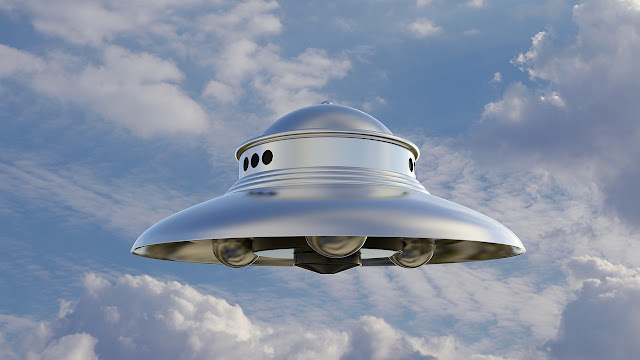 |
| Pixabay |
The Science and Technology Behind UFOs
The science and technology behind UFOs remains a topic of
much debate and speculation. While some believe that UFOs are the result of
advanced extraterrestrial technology, others argue that they could be the
result of secret military projects or natural phenomena.
One theory is that UFOs may be using advanced propulsion
systems, such as anti-gravity or warp drive, that allow them to travel at
incredible speeds and maneuver in ways that defy conventional physics. Some
also speculate that UFOs could be using advanced cloaking technology, making
them invisible to radar and the human eye.
Another area of interest is the potential use of exotic
materials in the construction of UFOs. Some believe that extraterrestrial
crafts may be made from materials that are not found on Earth, such as
metamaterials with unique properties that allow them to bend light and sound in
unusual ways.
Despite ongoing research, there is still much that is not
understood about the science and technology behind UFOs. Further scientific
investigation and analysis will be needed to uncover the truth behind these
mysterious aerial phenomena.
The Controversy and Skepticism
Surrounding UFOs
The topic of UFOs is often surrounded by controversy and
skepticism, with some people dismissing all claims of sightings as hoaxes or
misidentifications of conventional objects. Skeptics argue that there is no
concrete evidence to support the idea of extraterrestrial life visiting Earth,
and that many reported sightings can be easily explained as natural phenomena,
weather balloons, or conventional aircraft.
Others believe that there may be a deliberate cover-up by
governments and military organizations to hide the truth about UFOs. Some point
to government documents that have been declassified and released to the public,
such as those related to the US military's investigations into UFOs in the
1950s and 60s, as evidence of a government conspiracy to hide the truth about
UFOs.
There is also controversy surrounding the credibility of
witnesses who claim to have seen UFOs. While some are respected members of the
scientific community or military personnel with top-level security clearances,
others are considered to be unreliable or have been discredited.
Despite the controversy and skepticism, interest in the
topic of UFOs remains high, with ongoing scientific research and investigations
being conducted to try and uncover the truth behind these mysteries
The future of the study of UFOs or extraterrestrial
life
The future of the study of UFOs and extraterrestrial life is
an exciting and rapidly evolving field. With advancements in technology, such
as high-resolution cameras, advanced radar systems, and satellite imagery,
there is more potential than ever before to capture and study these mysterious
aerial phenomena.
One area of focus for researchers is the search for life
beyond Earth. With the discovery of exoplanets and the potential for liquid
water on some of them, the search for extraterrestrial life has become a major
priority for scientists. The development of new telescopes and space missions,
such as the James Webb Space Telescope and the Europa Clipper mission, will
enable researchers to explore these distant worlds and search for signs of life.
In addition, there is ongoing research into the physics and
technology behind UFOs. Scientists are studying the potential for advanced
propulsion systems, such as anti-gravity and faster-than-light travel, that
could enable spacecraft to travel vast distances through space.
Another area of focus is the investigation of reported
sightings of UFOs and encounters with extraterrestrial beings. With the
establishment of government task forces and the release of declassified
documents related to UFO sightings, there is ongoing interest in investigating
these phenomena to better understand their nature and potential implications
for humanity.
Overall, the future of the study of UFOs and extraterrestrial life is promising, with advancements in technology and increased scientific interest driving ongoing research and exploration in this exciting field.