
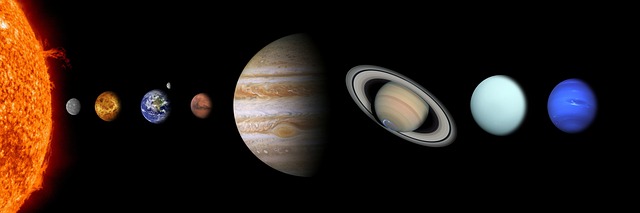
Humans have been fascinated with exploring the Solar System for centuries. The quest for exploration began with the invention of the telescope in the early 17th century, which allowed scientists to observe the planets and moons in our Solar System more closely. This led to the first recorded observations of the planets and moons, and the development of theories about their nature and origins.
 |
| Credit: Pixabay |
Earth "The Habitable Zone"
Humans are exploring different options to find a suitable and sustainable "habitable zone" as alternate to Earth.
Earth is habitable because it has a unique combination of characteristics that allow for the existence of liquid water, which is essential for life as we know it. Some of the key factors that make Earth habitable include:
- The
right distance from the sun: Earth is at the right distance from the sun
to allow for temperatures that are not too hot or too cold. This allows
for the existence of liquid water, which is essential for life.
- The
right size and composition: Earth is the right size and has the right
composition to have a strong magnetic field, which protects the planet
from harmful solar radiation.
- The
right atmosphere: Earth's atmosphere is composed of the right mix of
gases, such as oxygen and carbon dioxide that allows for the existence of
life. The atmosphere also helps to regulate the planet's temperature and
protect life from harmful radiation.
- The
right location in the galaxy: Earth is located in a region of the Milky
Way galaxy that is not too close to the center where the radiation is
intense, and not too far away where the resources are scarce.
- Plate
Tectonics: Earth has Plate tectonics which help to regulate the planet's
climate by controlling the amount of carbon dioxide in the atmosphere and
recycling nutrients in the soil.
All these factors have combined to create a hospitable
environment on Earth, which has allowed life to evolve and thrive over billions
of years. The understanding of these factors can help us to identify other
potentially habitable planets in the universe.
Currently, there is no planet other than Earth that is known to be capable of supporting human life.
 |
| Credit: Pixabay |
Any Chance Of Making Life Possible On Another Planet?
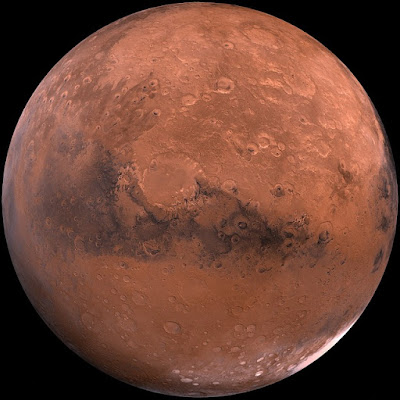
There is a possibility that humans could establish colonies on Mars {similar atmosphere and low gravity (about 38%) to Earth} or the Moon (no atmosphere and lower gravity) if we develop the necessary technology and resources to do so. However, it would be a significant challenge to create self-sustaining colonies on these bodies.
As for the possibility of the breeding , humans would have to overcome a number of physiological challenges in order to do so on Mars or the Moon. The low gravity, lack of atmosphere and high levels of radiation on these bodies would likely have a negative impact on human fertility and health. Additionally, the harsh environmental conditions would make it difficult to grow crops or raise animals for food.
However,
there is ongoing research into ways to make human habitation on Mars and the
Moon more sustainable, such as developing methods to produce food and oxygen,
and creating radiation-resistant materials for shelter. It is also important to
note that for now, the technology is not yet advanced enough for us to send
human to the moon or Mars and survive over a long period of time.
However, it
is also important to note that the Earth is not expected to become
uninhabitable for humans in the near future. There are many challenges that
humanity is facing such as climate change, loss of biodiversity, and resource
depletion, but with proper management and policy decisions, these problems can
be addressed.
Instead of focusing on making life possible on another planet, it's more important to focus on preserving life on Earth, and it's a much more reasonable and realistic goal.