
Human evolution refers to the process by which humans evolved from earlier species of primates. The scientific consensus is that modern humans (Homo sapiens) evolved from a common ancestor with chimpanzees and gorillas, and that this common ancestor lived in Africa around 6-7 million years ago.
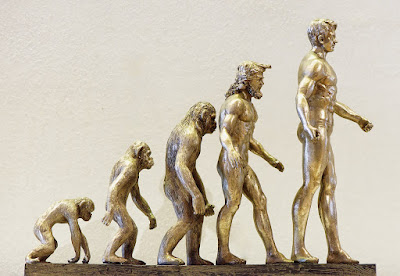 |
| pixabay |
There is a vast amount of evidence to support this view, including fossil remains, DNA analysis, and the study of human anatomy and behavior. The fossil record shows a clear pattern of human evolution, with older fossils exhibiting a more primitive anatomy and younger fossils showing a more modern anatomy. DNA analysis has also provided strong evidence for the evolutionary relationships between different species of primates, including humans.
Stages of human evolution
The stages of
human evolution refer to the different species and stages of development that
occurred in the evolution of humans from our earliest ancestors.
Here is a
summary of some of the main stages of human evolution:
- Sahelanthropus tchadensis (7-6
million years ago): One of the earliest known human ancestors,
Sahelanthropus tchadensis had a combination of ape-like and human-like
features. It is known from a single skull and jaw found in Chad, Africa.
- Orrorin tugenensis (6 million years
ago): Another early human ancestor, Orrorin tugenensis, is known from
several fossils found in Kenya, Africa. It had more human-like features
than Sahelanthropus tchadensis, including a more human-like spine and
pelvis.
- Ardipithecus ramidus (4.4 million
years ago): This early human ancestor is known from several partial
skeletons found in Ethiopia, Africa. It had a more human-like spine and
pelvis, and walked on two legs (bipedalism).
- Australopithecus (4-2 million years
ago): This group of early human ancestors includes several species, such
as A. afarensis (the species to which the famous fossil "Lucy"
belongs) and A. africanus. These species had a more human-like skull and
teeth, but still had ape-like features, such as long arms and a small
brain.
- Homo habilis (2.4-1.4 million years
ago): This early human species is known for its use of stone tools, which
is why it is often referred to as "Homo habilis" (meaning
"handy man" in Latin). It had a larger brain and a more
human-like skull and teeth than the australopithecines.
- Homo erectus (1.8 million-300,000
years ago): This early human species is known for its ability to control
fire and for its long-distance migrations. It had a more human-like body
and a larger brain than Homo habilis.
- Homo heidelbergensis
(600,000-200,000 years ago): This early human species is known from
several fossil finds in Africa and Europe. It had a more modern-looking
skull and teeth than Homo erectus, and may be the common ancestor of both
Homo sapiens (modern humans) and Neanderthals.
- Homo sapiens (200,000 years ago to
present): Modern humans, or Homo sapiens, are the only surviving species
of the genus Homo. They have a larger brain and a more modern-looking
skull and teeth than Homo heidelbergensis, and are known for their
advanced technology and cultural achievements
Theories about Human Evolution
There are
several theories about the evolution of humans and other primates. These
theories are based on a combination of fossil evidence, DNA analysis, and the
study of human anatomy and behavior.
One of the most
widely accepted theories of human evolution is the "Out of Africa"
theory, which proposes that modern humans evolved in Africa and then migrated
to other parts of the world. According to this theory, Homo sapiens (modern
humans) evolved from a common ancestor with chimpanzees and gorillas around 6-7
million years ago in Africa.
Another theory
is the "multiregional" theory, which suggests that modern humans
evolved simultaneously in different parts of the world from regional
populations of Homo erectus (an early human species). This theory is less
widely accepted than the Out of Africa theory, as it is not supported by as
much evidence.
There are also
several other theories about human evolution that have been proposed over the
years, including the "aquatic ape" theory, which suggests that humans
evolved from an aquatic ancestor. However, these theories are not
well-supported by scientific evidence and are generally not accepted by the
scientific community.
Discoveries about human evolution
There have been
many recent discoveries in the field of human evolution, as scientists continue
to study the fossil record and use new technologies to learn more about our
evolutionary history. Here are a few examples of recent discoveries:
- The discovery of a new species of
early human ancestor, Homo naledi, in South Africa in 2013. This species
had a combination of ape-like and human-like features, and may have lived
around 2-3 million years ago.
- The discovery of a new hominin
species, Denisovan, in 2010. Denisovans are an extinct group of humans
that lived in Asia around 300,000 years ago. They are known from DNA
evidence and a few fragmentary fossils.
- The discovery of an ancient human
skull in Ethiopia in 2019, which may be the oldest known Homo sapiens
fossil. This skull is around 200,000 years old and has a more
modern-looking anatomy than earlier human ancestors.
- The discovery of a human-like
primate species, Nyanzapithecus alesi, in Kenya in 2015. This species lived
around 13 million years ago and is thought to be a close relative of the
common ancestor of humans, chimpanzees, and gorillas.
- The discovery of a fossilized
hominin hand in Morocco in 2017, which may be the oldest known human
fossil outside of Africa. This fossil is around 2.4 million years old and
is similar to the hand bones of early human ancestors such as Homo habilis
It is important
to note that the process of evolution is ongoing, and that humans continue to
evolve today. However, the rate of evolution has slowed down in recent times
due to the development of medicine and other factors that have allowed humans
to survive and reproduce more successfully.