
Dinosaurs were a group of reptiles that lived millions of years ago during the Mesozoic Era, which lasted from about 252 to 66 million years ago. There were many different kinds of dinosaurs, ranging from small, bird-like creatures to large, armored herbivores and ferocious carnivores. Some of the most well-known dinosaurs include the Tyrannosaurus rex, Stegosaurus, Velociraptor, Triceratops and Diplodocus. Despite their fame, dinosaurs are now extinct and have not been seen on Earth for millions of years. However, scientists continue to study fossilized remains of dinosaurs in order to learn more about these ancient creatures and their place in the history of life on Earth.
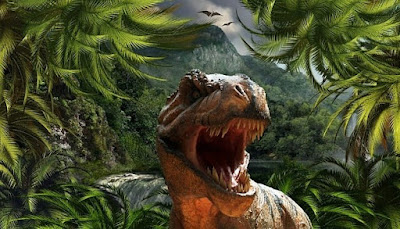 |
| pic credit: pixabay |
Predecessors of dinosaurs
Dinosaurs evolved from a group of reptiles called
archosaurs, which first appeared on Earth during the Late Permian period, about
252 million years ago. Archosaurs were a diverse group of reptiles that
included two main branches: the crurotarsans, which included crocodilians and
their relatives, and the ornithodirans, which included dinosaurs and their
closest relatives.
The first dinosaurs, which were small, carnivorous
creatures, evolved from a group of ornithodirans called the silesaurids during
the Late Triassic period, about 231 million years ago. Dinosaurs quickly
diversified and evolved into a wide variety of forms, including herbivores,
carnivores, and omnivores. They became the dominant group of land animals
during the Jurassic and Cretaceous periods, which lasted from about 201 to 66
million years ago.
It is worth noting that while dinosaurs are perhaps the most
well-known group of reptiles to have evolved during the Mesozoic Era, they were
not the only reptiles that lived during this time. Other groups of reptiles
that lived during the Mesozoic Era include pterosaurs (flying reptiles), marine
reptiles such as ichthyosaurs and plesiosaurs, and various types of lizards,
snakes, and turtles.
Theories about dinosaurs’ extinction
There are several theories about why dinosaurs went extinct
about 66 million years ago. The most widely accepted theory is that a large
asteroid impact was the cause of the dinosaurs' demise. Evidence for this
theory includes the presence of a large crater on Earth's surface that dates to
around the time of the dinosaurs' extinction, as well as the discovery of high
levels of iridium (a chemical element that is common in asteroids but rare on
Earth) in sediment layers dating to the same time period.
Other theories that have been proposed to explain the
extinction of the dinosaurs include volcanic activity, disease, and changes in
sea level and climate. However, these theories are not as well supported by
scientific evidence as the asteroid impact theory.
It is also important to note that while the dinosaurs as a
group went extinct, not all species of dinosaurs died out at the same time.
Some groups of dinosaurs, such as birds, survived and continue to thrive today
Successors of dinosaurs
After the dinosaurs went extinct about 66 million years ago,
a number of other species evolved and became dominant on Earth. These include
mammals, birds, reptiles, and amphibians.
Mammals, which are warm-blooded vertebrates that have hair
or fur and produce milk to nourish their young, evolved from small, rodent-like
creatures that lived during the time of the dinosaurs. After the dinosaurs went
extinct, mammals began to diversify and evolve into a wide variety of forms,
including carnivores, herbivores, and omnivores. Today, mammals are found on
every continent and include animals such as humans, dogs, cats, cows, and
elephants.
Birds are a group of warm-blooded vertebrates that are
characterized by their feathers and the ability to fly. Many scientists believe
that birds evolved from small, feathered dinosaurs that lived during the
Mesozoic Era. After the dinosaurs went extinct, birds became the dominant group
of flying animals and are found on every continent today.
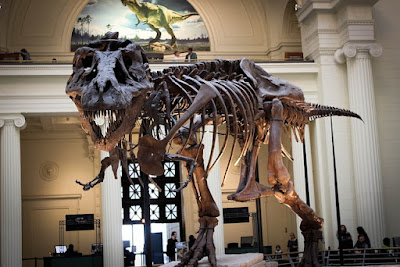 |
| pic credit: pixabay |
Reptiles are a group of cold-blooded vertebrates that includes
snakes, lizards, turtles, and crocodilians. Some reptiles, such as
crocodilians, are thought to be closely related to dinosaurs and may have
evolved from them. After the dinosaurs went extinct, reptiles continued to
thrive and are found on every continent today.
Amphibians are a group of cold-blooded vertebrates that
include frogs, toads, salamanders, and newts. Amphibians evolved from fish-like
ancestors during the time of the dinosaurs and continue to thrive today,
although they are not as diverse or widespread as some other groups of animals.
Discoveries about “Extinct” dinosaur
There are always new discoveries being made in the field of paleontology, the study of fossilized plants and animals. Many of these discoveries pertain to dinosaurs, as paleontologists work to uncover new fossil specimens and learn more about these ancient creatures. Some recent examples of new discoveries about dinosaurs include:
- In
2021, scientists discovered a new species of small, feathered dinosaur in
China that lived about 120 million years ago. The dinosaur, named
"Caihong juji," had a rainbow-colored plumage and is thought to
have been an early ancestor of modern birds.
- In
2020, researchers discovered the fossilized remains of a new species of
dinosaur in Brazil that lived about 110 million years ago. The dinosaur,
named "Akainacephalus johnsoni," was a herbivore with a large,
armored head and a beaked snout.
- In
2019, a team of paleontologists announced the discovery of a new species
of carnivorous dinosaur in Australia. The dinosaur, named
"Deltadromeus agilis," was a fast, agile predator that lived
about 95 million years ago.
These are just a few examples of the many new discoveries that have been made about dinosaurs in recent years. As researchers continue to study fossilized remains and learn more about these ancient creatures, it is likely that many more new discoveries will be made in the future
It is worth noting that while these groups of animals
evolved and became dominant after the dinosaurs went extinct, many other
species also evolved and continue to thrive on Earth today, including insects,
plants, and various types of marine life.