
Advancements in Space Technology
Advancements in space technology have revolutionized our ability to explore and understand the universe. Here are some key areas of advancement:
- Miniaturization: Advances in electronics and materials science have allowed for the miniaturization of spacecraft and instruments, enabling the development of smaller and more agile probes and rovers.
- Robotics: Robotic technologies have allowed us to explore new frontiers in space, including the use of rovers to explore the surface of Mars and other planets.
- Propulsion: New propulsion technologies, including ion engines and nuclear propulsion, offer greater efficiency and speed for space travel.
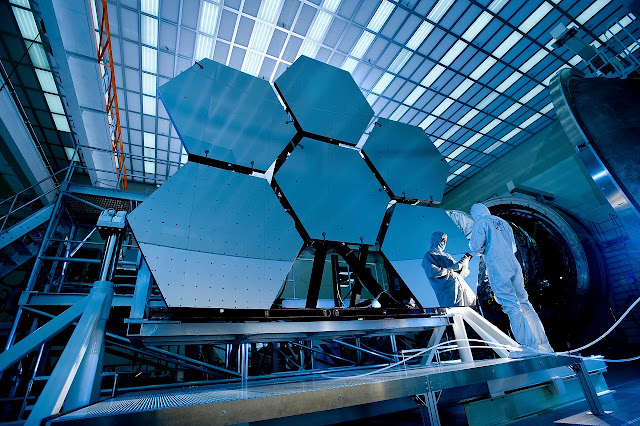
- Materials science: Advances in materials science have led to the development of new materials with unique properties, including lightweight and strong composites that can withstand the harsh conditions of space.
- Communication: The development of communication technologies, including satellites and deep space antennas, has allowed for real-time communication with spacecraft and increased data transmission capabilities.
Overall, advancements in space technology have enabled us to
push the boundaries of space exploration, paving the way for new discoveries
and insights into the universe.
 |
| Pixabay |
Space Technology for Exploration
Space technology has played a critical role in enabling exploration of the universe beyond Earth. Here are some key space technologies used for exploration:
- Probes and Rovers: Probes and rovers are unmanned spacecraft that can explore planets, moons, asteroids, and comets. They are equipped with instruments such as cameras, spectrometers, and other sensors that can gather data and images.
- Satellites: Satellites orbiting the Earth can be used for exploration of the Earth's surface, atmosphere, and space beyond. They can also be used for navigation, communication, and monitoring weather patterns.
- Telescopes: Telescopes are instruments used to observe the universe from Earth or from space. They are used to study planets, stars, galaxies, and other celestial bodies.
- Landers: Landers are spacecraft that are designed to land on the surface of a planet or moon. They can carry scientific instruments that can analyze the surface and atmosphere of the planet.
- Sample return missions: Sample return missions involve the collection of samples from celestial bodies, such as rocks or soil from the Moon or Mars, and returning them to Earth for analysis.
These space technologies have enabled us to gather data and
images from distant planets, moons, and asteroids, and to study the universe in
ways that would have been impossible just a few decades ago.
The Power of Rockets
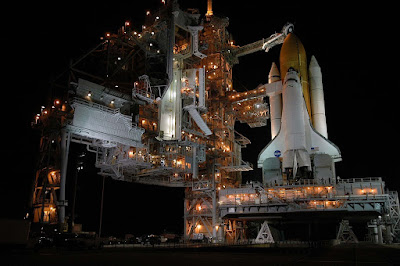
Rockets are the key to space travel, providing the thrust
needed to overcome the Earth's gravity and enter into orbit. Here are some
advancements in rocket technology that have enabled us to explore space:
- Liquid
Fuel Rockets: Liquid fuel rockets are the most common type of rocket used
for space exploration. These rockets burn liquid fuels, such as liquid
hydrogen and liquid oxygen, to generate thrust.
- Solid
Fuel Rockets: Solid fuel rockets use a solid fuel, such as ammonium
perchlorate composite propellant, to generate thrust. These rockets are
used for shorter missions, such as launching satellites into Earth's
orbit.
- Reusable
Rockets: Reusable rockets are designed to be used multiple times, reducing
the cost of space travel. The first stage of the rocket returns to Earth
and lands vertically, rather than being discarded.
- Nuclear
Rockets: Nuclear rockets use nuclear reactions to generate thrust. These
rockets are still in the experimental stage, but they have the potential
to provide much greater thrust than chemical rockets.
- Electric
Propulsion: Electric propulsion systems use electric fields to accelerate
ions or plasma, providing a more efficient method of propulsion than
chemical rockets. These systems are used for long-duration missions, such
as deep space exploration.
Overall, advancements in rocket technology have made space
travel more efficient, reliable, and affordable, paving the way for future
exploration of the universe.
 |
| Pixabay |
Space-Based Communication
Space-based communication refers to the use of satellites
and other space-based systems to facilitate communication on Earth and beyond.
Here are some key technologies and concepts related to space-based
communication:
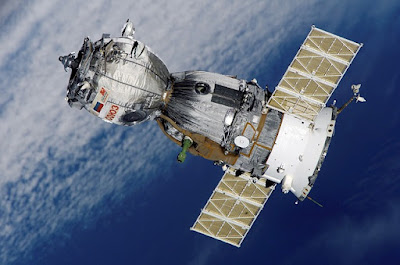
- Satellites:
Satellites in orbit around the Earth provide a reliable and efficient
method of communication. They are used for a wide range of applications,
including television broadcasting, internet communication, navigation, and
military communication.
- Ground
Stations: Ground stations are used to communicate with satellites,
receiving data and sending commands to the satellite. Ground stations are
located around the world and are connected to the internet to enable
global communication.
- Deep Space Communication: Deep space communication involves sending signals and data over long distances, such as to spacecraft exploring the outer solar system. Deep space communication requires advanced technology, including large antennas and sophisticated signal processing.
 |
| Pixabay |
Technologies For Sustainable Spacecraft
Spacecraft must be designed to be self-contained and
sustainable, as resources are limited in space. Some of sustainable
spacecraft technologies include
- Life
Support Systems: Life support systems provide oxygen, water, and other
necessities for human life in space. These systems must be designed to
recycle waste and produce resources to sustain life for long-duration
space missions
- Solar
Power: Solar panels are used to generate electricity for spacecraft. As
the sun is a constant source of energy in space, solar power is a reliable
and renewable source of energy for spacecraft.
- Water
Recycling: Water is a precious resource in space, and water recycling
systems are used to conserve and reuse water. Water can be extracted from
waste products and recycled to provide drinking water for astronauts.
- Waste
Management: Waste management systems are used to recycle waste products,
including urine and feces, to produce resources such as oxygen and water.
- Radiation
Shielding: Spacecraft must be shielded from the harmful effects of
radiation, which can damage equipment and harm astronauts. Radiation
shielding technologies, such as water-filled walls and radiation-absorbing
materials, are used to protect spacecraft and astronauts.
Overall, sustainable spacecraft technologies are critical
for long-duration space missions, and can help reduce the environmental impact
of human activities in space. These technologies ensure that spacecraft can
sustain human life in space for extended periods while minimizing resource
consumption and waste